
7 Common Math Challenges Parents Notice During Seventh Grade
The seventh grade is when a change in the learning process of math begins. Rather than repeating and reinforcing their already known skills, children are expected to tackle complex math problems requiring reasoning, planning, and knowledge of previously learned math concepts. Lessons become quicker, and new subjects are based on the knowledge acquired from previous lessons. Therefore, students who previously were doing great may now struggle with homework and feel insecure during lessons.
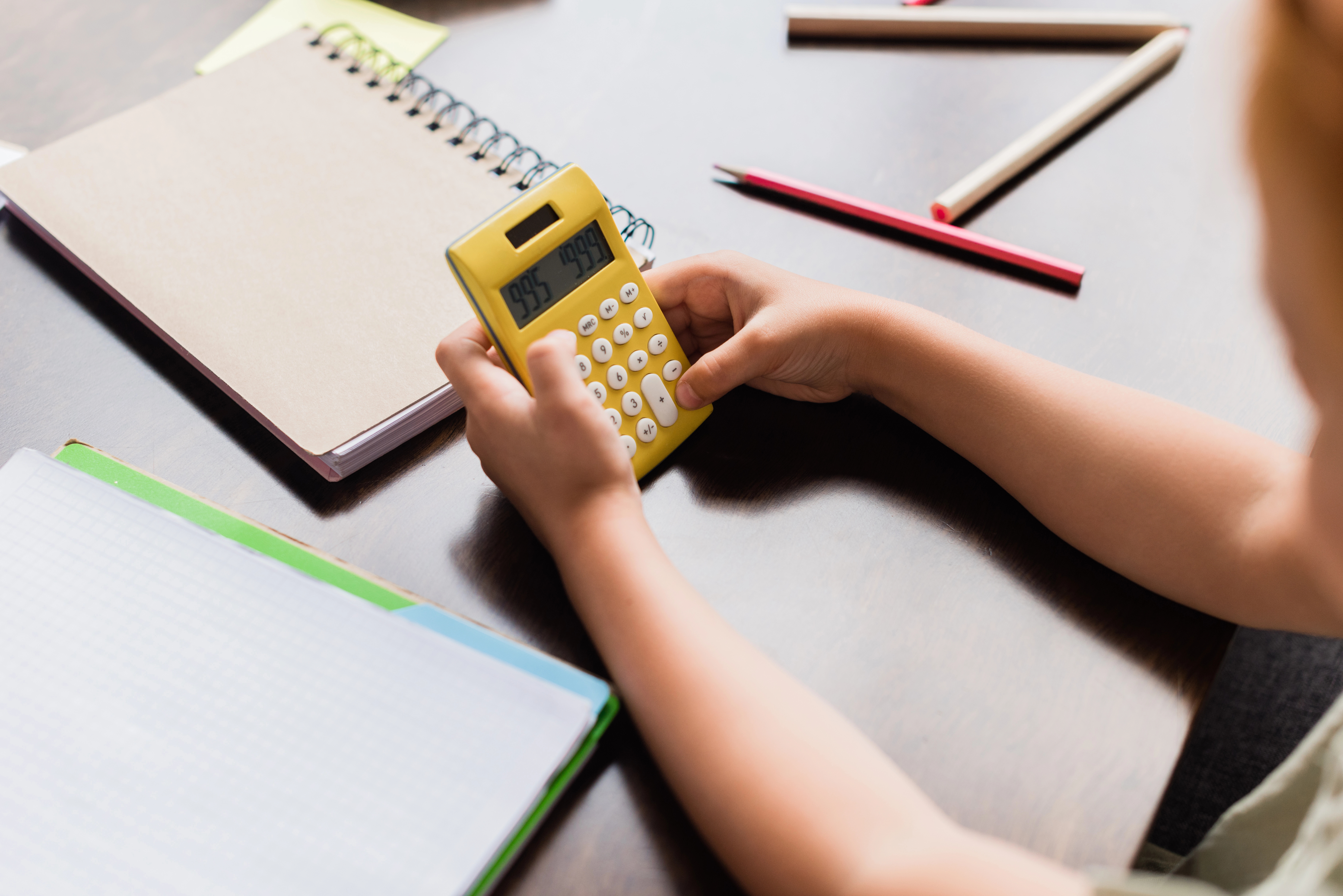
Parents will likely spot the difference in their children well before report cards reflect the problem. Homework will begin taking twice as long, there will be increased mistakes made, and a loss of the confidence that once existed may appear.
Getting a 7th grade math tutor can help pinpoint why a student is having difficulty and provide individualized instruction based on his or her needs. According to the What Works Clearinghouse, an initiative by the U.S. Department of Education, individually or small group-based math instruction is effective at improving the math achievement of middle schoolers.
1. Multi-Step Problems Feel More Complicated
Solving one-step equations is not common among seventh graders since there is a need to comprehend carefully, choose the right procedure, calculate more than once, and finally check to obtain the answer. The students could have understood the concept; however, missing one step would give an incorrect answer.
Signs Parents May Notice
- Homework takes much longer than before.
- Steps are skipped while solving problems.
- Small calculation mistakes affect the final answer.
- Word problems cause frustration.
- Students do not finish difficult questions.
The way of helping students by breaking down their task into small bits can help solve the problem.
2. Fractions, Decimals, and Percentages are No Longer Easy
The three skills are incorporated into bigger mathematical concepts in seventh grade. Students need to use all three forms in solving equations, comparing numbers, and in ratios. Even if the students are aware of the individual skill, incorporating the three in one mathematical exercise can prove challenging.
One example is when parents observe their children getting the practice examples right, yet having difficulty when the concepts arise in word problems. The solution would be to encourage the students to integrate the three skills into their daily experiences, like shopping or playing sports.
3. Integers Become a Common Source of Errors
Positive and negative numbers become very common in seventh-grade math. Learners need to understand how each mathematical operation influences positive and negative numbers as well as use those concepts in calculations and plotting. Understanding mathematical operations can help learners solve simple tasks easily.
Common Warning Signs
- Positive and negative signs are mixed up.
- Operation rules are forgotten.
- Students guess instead of solving carefully.
- Integer questions create hesitation.
- Similar mistakes appear repeatedly.
Regular practice merged with clear illustrations helps students understand why integer rules work instead of relying on memorization alone.
4. Ratios and Proportions Start to Look Different in Every Lesson
Ratio and proportions will help children solve problems using algebra, geometry, and even real-world problems. However, the difficulty lies in the fact that ratios and proportions can be presented in many forms, which include tables, graphs, equations, and word problems. When children learn the process in one form, they have trouble solving it in other forms.
The child can definitely feel confident in solving the ratio question while in class, yet when the same question or a more complicated one comes in the practical world, he or she gets confused. Helping children see patterns instead of memorizing the procedures involved assists in acquiring good problem-solving skills.
5. Algebraic Expressions Begin to Feel Unfamiliar
Seventh grade is where students begin to experience the subject of algebra to a far greater extent than before. The concepts of variables, expressions, and equations are included in assignments that require students to apply logic instead of simple mathematical calculations. A student can be familiar with solving one equation but be confused with several operations combined.
At times, parents will observe that there is trial and error in the homework more often than not. This generally occurs because students do not know why each step is important, and not just how to perform it. Understanding the concept of algebraic reasoning is key.
Signs Parents May Notice
- Variables seem confusing.
- Students solve similar equations differently each time.
- Work becomes disorganized during multi-step equations.
- Simple algebra mistakes appear repeatedly.
- Homework takes much longer than expected.
6. Confidence Drops After a Few Difficult Lessons
Every instance of difficulty does not start with bad grades. There are also students who keep getting good grades but gradually lose self-confidence. A few tough tasks and a couple of poor quiz scores might make them doubt themselves, which would make them refrain from participating and stop trying.

The parents’ first indication of such problems will most likely be the child’s changed attitude toward the subject rather than his or her poor academic progress. An easy-going attitude turns into complaints about homework or fear of every upcoming test.
Behaviors That May Signal Low Confidence
- Avoids difficult questions.
- Says, “I’m just bad at math.”
- Gives up after making one mistake.
- Hesitates to answer questions in class.
- Becomes anxious before quizzes or homework.
7. Math Vocabulary Makes Instructions Harder to Understand
The language of math starts to develop at the middle school level. The following terms come up quite often: coefficient, constant, proportional relationship, and inequalities. While students understand how to work out these problems, they might have difficulty solving them since they don’t really understand the language used in the problem.
A 7th grade math tutor uses simple methods to introduce new terms while relating the terms to real-world examples. When students start to know the language of math, everything else gets easier for them.
Math Terms Students Commonly Find Confusing
- Expressions
- Equations
- Coefficients
- Constants
- Unit rate
- Proportional relationship
- Inequality
- Rational numbers
Slowly learning these concepts means that students will approach new concepts in class with more enthusiasm rather than fear of the new vocabulary they encounter.
FAQs
Is it possible that developing proficiency in mathematics in the seventh grade will assist in future classes?
Yes, this is true. The seventh grade forms the base for learning algebra, geometry, and other subjects of math in the future.
Should seventh-grade math be much harder?
Sure, it should. The knowledge gained at this grade level will help you go to algebra and further in your mathematical classes. Emphasis on logic and the ability to solve complex equations make it a hard class compared to previous years.
What can parents do to help with math at home?
Try to encourage children to practice regularly, to talk about their approach to the solution, and not only to try to solve it. If, nevertheless, they have difficulties with that, it would be helpful to seek help in their studies.
Seventh-grade mathematics involves many new things for students that force them to think differently from what they were used to doing in elementary school. Complex word problems, expressions, integers, ratios, and unknown terminology can be hard to deal with for some children, especially those who have been enjoying math up to this point.
The parents who succeed in noticing all those changes earlier on will be able to make a difference for the sake of their children’s future. It is easy to detect some problems that a child may be experiencing at school just by monitoring his or her performance in terms of doing homework or solving problems.