
Flower girls: The history, symbolism, and tasks
When organizing a wedding, there are many different things to take into consideration, from the menu to the bride’s dress, the venue, the guest list, and the activities you want to take place during the ceremony. In order to have everything turn out exactly how you imagined it, you should make sure that all areas of the wedding are discussed and planned, including those that may not seem crucial. The flower girl or girls that will be part of your ceremony is one of the aspects that will definitely require your attention.
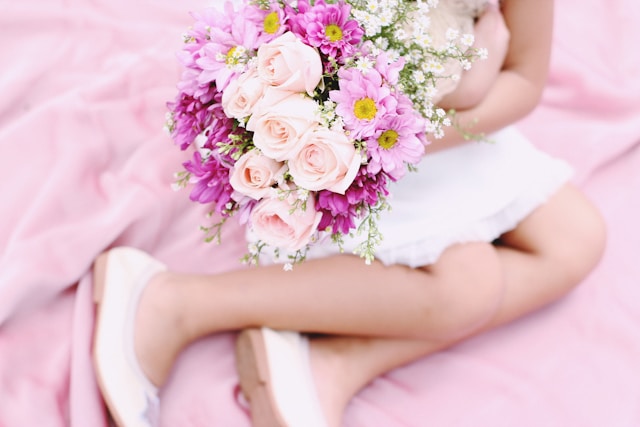
What are flower girls?
A flower girl is an integral part of a traditional wedding procession and is typically a member of the extended family of one of the spouses. However, she can also be part of a family that is friends with the newlyweds. These girls are typically very young, ranging from three to seven years old. During the procession, they walk down the aisle with their partners, who can be either page boys or ring-bearers. The former are essentially young male equivalents of the bridesmaids who assist with different tasks during the wedding, such as carrying the bride’s train, while the latter is a subcategory of the page boys.
The ring bearer symbolically carries the wedding ring on a cushion, although the real ones are typically kept by the best man, as he can ensure their safekeeping. The flower girl walks in front of the bride and scatters flower petals before she walks down the aisle. However, you should remember that some venues forbid this practice. If you want to have flower girls at your ceremony, it is crucial to check in advance. In the event that the place you had in mind doesn’t allow flowers, you will still have time to change things and find a venue that does.
The outfit
Outfits are one of the most important things when it comes to the wedding and there’s a lot of symbolism and unspoken rules that go into choosing the perfect one. The bridesmaids, mother of the bride, and guests are expected to wear different colors and styles for instance, and in some situations the bride will determine what everyone is wearing. The outfit worn by the flower girl is traditionally a smaller version of the wedding dress.
She is the only exception to the rule that dictates nobody should wear white at a wedding apart from the bride herself. While today it is expected that the girl’s parents will pay for her clothing and all other expenses related to her participation at the wedding, her clothing was provided by the families of the newlyweds back in the day. If you want and have the time for it, you can make the flower girl dress into a DIY project as well.
The bride and her mother can take care of this project, although it’s important to remember that it takes a bit of skill to get it right. You should choose a pattern that aligns with the style and theme of the wedding as well as your particular skill level. White and ivory are the classic choices when it comes to the chromatics, but things are more relaxed with the fabrics. You can choose from chiffon, satin, lace, and tulle, depending on the season and the level of formality.
Remember that comfort is key and that the dress should be breathable, soft, and allow for ease of movement so that the child doesn’t feel miserable wearing it. The silhouette is generally a simple A-line ball gown, but you should also ask the little girl if she’d like something else. Embroidery, beading, sashes, bows, and lace can be added for extra elegance, and if you expect the weather to get chilly, you should definitely make sure that the dress comes with sleeves as well.
Knee-length and tea-length are the most common choices for flower girls. Floor-length gowns can be used sometimes as well, but they might not be a very good idea for the really young flower girls as they might trip and fall wearing them. Ideally, the pattern you choose should provide comprehensive instructions into the best ways to cut fabric, sew the skirt and bodice, and attach the zippers and buttons.
The symbolism
As with most things related to the wedding, the presence of a flower girl is tied to ritual and symbolism. These tiny guests are believed to enhance the aisle with flowers, with the idea being that the petals mark the bride’s transition from girlhood to adulthood. For this reason, the flower girl can sometimes carry confetti, wrapped candy, or bubbles instead. Apart from the idea that the flower girl serves as a representation of the bride during her childhood days, she can also symbolize the forming of a new family.
The background
Are flower girls a longstanding tradition or something fairly modern? The truth is that this tradition dates back several centuries ago, back when marriages were typically arranged by the parents. Flower girls carried bouquets of herbs and sheaves of wheat back then, representing prosperity and the hope that the bride and groom would go on to have many children. These offerings were common during the Roman Empire, but by the Renaissance, they were replaced by garlic, which the people believed had the ability to repel bad luck and malevolent spirits.
During the Elizabethan era, between 1558 and 1603, the wedding guests themselves would scatter petals from the home of the bride all the way to the church. Flower girls carried gilded rosemary branches and silver cups adorned with ribbons. The flower girls of today largely resemble those of the Victorian era, where the customs changed significantly. The girls wore gowns made of muslin during this time and carried highly ornate baskets filled with blooms as well as floral hoops meant to symbolize an enduring, lifelong marriage.
The flower girl is an important part of a wholesome wedding ceremony, so if you want to make sure that everything goes perfectly during your special day make sure to take this detail into consideration as well.